HD Construction

Why the South East has so many data centres – but ‘not enough’ water to keep them cool

Data centre construction in the UK has accelerated, largely driven by the growth of artificial intelligence (AI). The South East has become a prime location for investment, with Greater London emerging as one of Europe’s largest digital infrastructure markets.

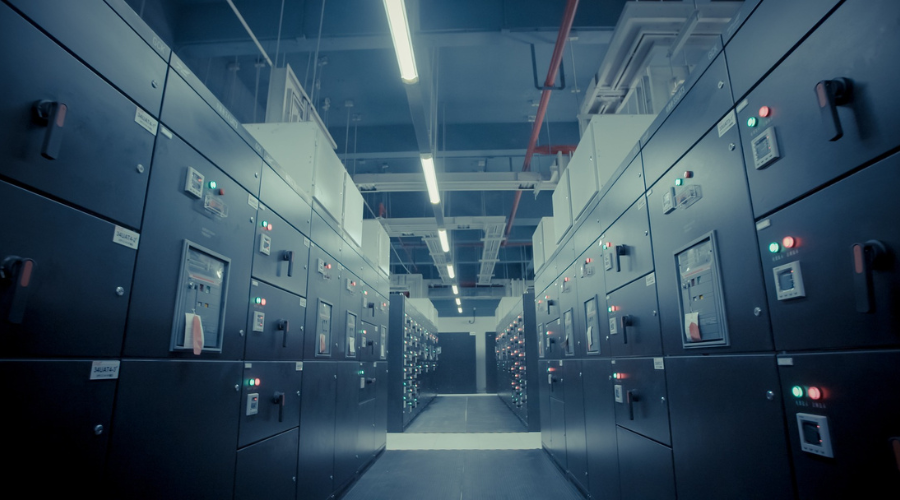
Data centre

Slough, in particular, for instance, has established itself as a major centre for development, with roughly 30 to 40 facilities.

Associate director and data centre expert at Arup, Mike Leaford, said this was the impact of “decades of network effects”, meaning that once a location gains important infrastructure and attracts major companies, more will follow.

“Slough grew up as a telecoms and interconnection hub, and once fibre routes, meet-me rooms and exchange points are established, subsequent operators tend to follow,” Leaford said.

Adding: “Proximity to the city [London], latency-sensitive financial services, a deep skills base and existing power and telecoms infrastructure all reinforced that gravity.”

The Berkshire town was once a major industrial area, with numerous factories that required substantial amounts of electricity. This existing power infrastructure has made the area well suited for the data centre boom.

Facilities generally fall into four categories: enterprise, co-location, hyperscale and AI. Enterprise data centres are owned and operated by a single organisation for its own purposes, while co-location facilities are operated by third parties that rent space to customers, such as Vantage and digital infrastructure Equinix.

Equinix has begun construction of its LD14 data centre on the Slough Trading Estate and is expected to finish this September, according to Barbour API.

Hyperscale data centres are built by major cloud providers, including Google and Microsoft, and AI facilities specialise in the computing needs required for AI development. 

That being said, construction is increasingly moving further out, with facilities popping up in Manchester and South Wales.

SPONSORED CONTENT by CHIME

Champion Groundworks have removed 100’s of phone calls and paper timesheets with a move to digital. Read More

Tanner Boriack/Unsplash.

Leaford said AI was “getting all the attention” currently, which has resulted in the growth of data centre construction.

According to Oxford Economics, numbers had risen to an estimated 266 data centres by 2024, and energy demand was forecast to grow more than fivefold by 2030.

Equally, data centre construction is experiencing ”unprecedented” growth, with projections expected to quadruple in value by 2029, according to Barbour API.

Leaford added: “AI is leading to a fundamental shift in the way that data centres are designed, however. 

“Over the last 10 years, the amount of power drawn by a rack has increased steadily at a relatively low pace. 

“AI has accelerated that significantly, leading to requirements for new ways of cooling – taking liquid to the chip, and power distribution within the facility”.

The government has made significant steps to embed AI planning in the UK, with AI growth zone proposals and more recently the first ever AI minister.

However, there are emerging concerns over water consumption when it comes to data centres. 

Credit: Pixabay / Pexels

Trade association, Water UK have claimed government ambitions to expand data centre capacity have neglected to consider water demand for these facilities. 

In a statement, Water UK said: “This problem is growing yet the government’s planning for artificial intelligence appears to assume the country will have sufficient supplies of water.” 

Adding: “Not a single new reservoir has been built in England for more than 30 years despite a more than 20 per cent increase in population over that time and significant changes to our climate.” 

Meanwhile, Affinity Water which supplies water for the Slough-West London corridor have reported the pressures facing England’s water supply are not “evenly distributed” and water demand had not been not accounted for despite the scale of water annually consumed.

Speaking on whether the UK can cope with the water required to support data centre expansion, Leaford said: “Yes, but only with coordinated planning across grid, water, planning and land. Water is one part of a wider system. 

“It’s worth distinguishing between using water and consuming it – most UK facilities operate closed-loop systems that circulate water internally without evaporating it, and the UK’s climate is relatively favourable for dry and hybrid cooling.”

He said demand for cooling is highest on hotter days, adding onsite storage can “mitigate” this.

Growth will need to be managed through a wider set of levers: distributing capacity to less-constrained regions, using non-potable or recycled water where possible, adopting a catchment-wide view of water stewardship, and treating data centres as long-term partners in local infrastructure rather than isolated loads” said Leaford.

Was this interesting? Try: 10 UK data centre construction projects to watch

If you have a tip or story idea that fits with our publication, email: elohor@wavenews.co.uk

Get industry news in 5 minutes!

A daily email that makes industry news enjoyable. It’s completely free.

Notice: JavaScript is required for this content.

Data centre construction in the UK has accelerated, largely driven by the growth of artificial intelligence (AI). The South East has become a prime location for investment, with Greater London emerging as one of Europe’s largest digital infrastructure markets.

Data centre

Slough, in particular, for instance, has established itself as a major centre for development, with roughly 30 to 40 facilities.

Associate director and data centre expert at Arup, Mike Leaford, said this was the impact of “decades of network effects”, meaning that once a location gains important infrastructure and attracts major companies, more will follow.

“Slough grew up as a telecoms and interconnection hub, and once fibre routes, meet-me rooms and exchange points are established, subsequent operators tend to follow,” Leaford said.

Adding: “Proximity to the city [London], latency-sensitive financial services, a deep skills base and existing power and telecoms infrastructure all reinforced that gravity.”

The Berkshire town was once a major industrial area, with numerous factories that required substantial amounts of electricity. This existing power infrastructure has made the area well suited for the data centre boom.

Facilities generally fall into four categories: enterprise, co-location, hyperscale and AI. Enterprise data centres are owned and operated by a single organisation for its own purposes, while co-location facilities are operated by third parties that rent space to customers, such as Vantage and digital infrastructure Equinix.

Equinix has begun construction of its LD14 data centre on the Slough Trading Estate and is expected to finish this September, according to Barbour API.

Hyperscale data centres are built by major cloud providers, including Google and Microsoft, and AI facilities specialise in the computing needs required for AI development. 

That being said, construction is increasingly moving further out, with facilities popping up in Manchester and South Wales.

SPONSORED CONTENT by CHIME

Champion Groundworks have removed 100’s of phone calls and paper timesheets with a move to digital. Read More

Tanner Boriack/Unsplash.

Leaford said AI was “getting all the attention” currently, which has resulted in the growth of data centre construction.

According to Oxford Economics, numbers had risen to an estimated 266 data centres by 2024, and energy demand was forecast to grow more than fivefold by 2030.

Equally, data centre construction is experiencing ”unprecedented” growth, with projections expected to quadruple in value by 2029, according to Barbour API.

Leaford added: “AI is leading to a fundamental shift in the way that data centres are designed, however. 

“Over the last 10 years, the amount of power drawn by a rack has increased steadily at a relatively low pace. 

“AI has accelerated that significantly, leading to requirements for new ways of cooling – taking liquid to the chip, and power distribution within the facility”.

The government has made significant steps to embed AI planning in the UK, with AI growth zone proposals and more recently the first ever AI minister.

However, there are emerging concerns over water consumption when it comes to data centres. 

Credit: Pixabay / Pexels

Trade association, Water UK have claimed government ambitions to expand data centre capacity have neglected to consider water demand for these facilities. 

In a statement, Water UK said: “This problem is growing yet the government’s planning for artificial intelligence appears to assume the country will have sufficient supplies of water.” 

Adding: “Not a single new reservoir has been built in England for more than 30 years despite a more than 20 per cent increase in population over that time and significant changes to our climate.” 

Meanwhile, Affinity Water which supplies water for the Slough-West London corridor have reported the pressures facing England’s water supply are not “evenly distributed” and water demand had not been not accounted for despite the scale of water annually consumed.

Speaking on whether the UK can cope with the water required to support data centre expansion, Leaford said: “Yes, but only with coordinated planning across grid, water, planning and land. Water is one part of a wider system. 

“It’s worth distinguishing between using water and consuming it – most UK facilities operate closed-loop systems that circulate water internally without evaporating it, and the UK’s climate is relatively favourable for dry and hybrid cooling.”

He said demand for cooling is highest on hotter days, adding onsite storage can “mitigate” this.

Growth will need to be managed through a wider set of levers: distributing capacity to less-constrained regions, using non-potable or recycled water where possible, adopting a catchment-wide view of water stewardship, and treating data centres as long-term partners in local infrastructure rather than isolated loads” said Leaford.

Was this interesting? Try: 10 UK data centre construction projects to watch

If you have a tip or story idea that fits with our publication, email: elohor@wavenews.co.uk

Get industry news in 5 minutes!

A daily email that makes industry news enjoyable. It’s completely free.

Notice: JavaScript is required for this content.

Leave a Reply

Your email address will not be published. Required fields are marked *

Select the fields to be shown. Others will be hidden. Drag and drop to rearrange the order.
  • Image
  • SKU
  • Rating
  • Price
  • Stock
  • Availability
  • Add to cart
  • Description
  • Content
  • Weight
  • Dimensions
  • Additional information
Click outside to hide the comparison bar
Compare