

A reliable snagging workflow does not depend on a live signal. Managing snagging lists with subcontractors means recording each issue’s location, required correction, responsible trade, deadline and status, then tracking it through correction and verification. Where site connectivity is unreliable, offline access and a clear process for updating the shared record help keep work moving.
It is sensible to ask how a contractor manages snagging, especially when teams need to record and resolve issues across different areas of a site. The key is not simply whether an app is used, but how snag details, photographs and progress updates remain clear and accessible when a connection drops.
This article explains what a snag list should cover, how regular checks and clear records can reduce outstanding items before final inspection, and how subcontractors can support re-inspection and sign-off. It also covers offline snagging, showing how a structured process maintains accountability from the first recorded issue through to handover.
Key Takeaways
- Use progressive inspections to catch repeat defects while the relevant work is still under way, rather than leaving every check until the final walkthrough.
- Make each snag traceable by recording its location, assigned trade, required correction, deadline and status.
- Keep re-inspection and sign-off distinct from repair: close an item only after the corrective work and supporting evidence have been reviewed.
- Plan for poor site connectivity so snag details and progress updates can still be captured and synchronised when a connection is available.
How Do Professional Contractors Reduce Snag Items Before the Final Inspection?
Professional contractors inspect work as it progresses, recording defects before they affect following trades. A structured snag list then helps ensure corrections are made before practical completion.
Progressive Inspections to Prevent Repeat Defects
Progressive inspections check completed stages before work moves on, helping teams catch recurring defects early. For example, a main contractor can review a finished area during site walks, then assign corrections before similar work proceeds elsewhere. This limits repeated faults and avoids leaving discoveries until the final inspection. Snagging should take place when work is substantially complete, before practical completion is certified. Under JCT contracts, the defects liability period is typically 12 months, so unresolved issues can continue after handover.
Identifying Cosmetic, Functional and Incomplete Work
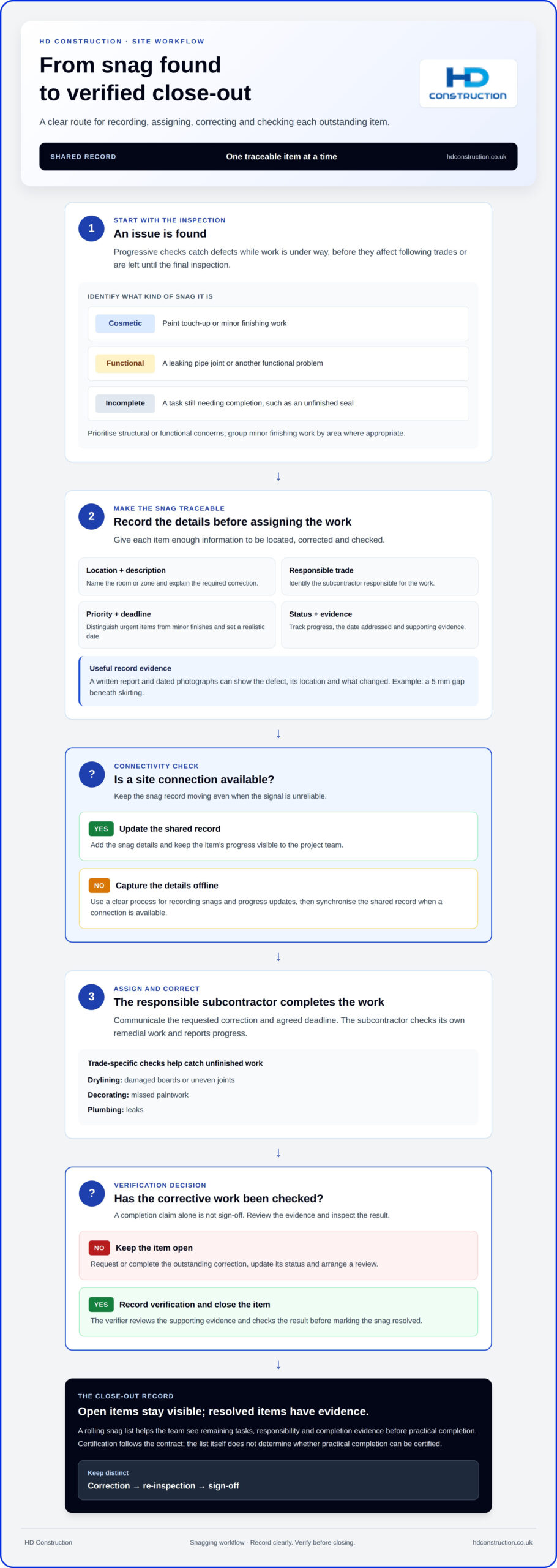
Snags include cosmetic faults, functional problems and incomplete tasks that prevent work from meeting the required finish. A paint touch-up is cosmetic; a leaking pipe joint affects function; an unfinished seal needs completion. This distinction helps the main contractor prioritise structural or functional concerns and group minor finishing work by area. Contract terms should define each subcontractor’s scope, snagging duties, deadlines and responsibility for corrective costs. Retention or withholding payment may be available where the contract allows it, but any payment action must follow the agreed terms.
Recording Defects in Reports and Photographs
A written report should state the defect’s location, the problem and the required correction, supported by dated photographs. The main contractor can add the item to a plan or room record, assign a responsible trade and set a realistic deadline. If a subcontractor disputes responsibility or delays work, compare the agreed scope, site records and photographs, then follow the contract’s dispute process. On an occupied site, snagging can expose workers and occupants to dust, trip hazards and tools. Keep work areas controlled and routes safe and accessible.
Trade-Specific Defect Identification
Each subcontractor should inspect its own trade’s work before offering it for final inspection. Drylining teams can identify damaged boards or uneven joints; decorators can flag missed paintwork, and plumbing teams can report leaks. Trade-specific checks catch incomplete work before it affects finishes or other packages. Subcontractors should report findings promptly, correct assigned items and provide completion evidence. The main contractor then reviews the result, coordinates affected trades and records whether each item is ready for verification.
What is a snag list?
A snag list is an itemised record of outstanding work, including defects and incomplete tasks. To create and prioritise it, the main contractor combines inspection findings with comments from the client or architect, identifies urgent issues and groups related work by area or trade.
A useful record gives each item enough detail to assign, track and verify the work:
- Location and description: identify the room or zone and explain the required correction, such as a 5 mm gap beneath skirting.
- Responsibility: name the subcontractor or trade responsible for the work.
- Priority and deadline: distinguish urgent items from minor finishes and set a realistic completion date.
- Status and evidence: record progress, the date addressed and supporting completion evidence.
A rolling snag list, sometimes called snag-as-you-go, records issues as work progresses rather than waiting for the final inspection. During site walks, the main contractor can add newly identified items and keep previous remedial work visible. This creates an ongoing record of open tasks and helps prevent completed work from being repeated or overlooked.
For each entry, the main contractor assigns a responsible subcontractor, communicates the requested correction and deadline, then tracks the status. The subcontractor reports progress and provides evidence once the work is addressed. The verifier reviews the evidence and inspects the result before marking the item resolved. If a correction affects another trade, the main contractor coordinates the sequence to avoid creating another outstanding task.
Before practical completion, the list helps the project team distinguish outstanding work from items already resolved. It supports a clear handover record, but does not determine whether practical completion can be certified. That decision follows the contract. Dated photographs, inspection records and written explanations can show what changed and support later review. A well-maintained record gives the project team a shared view of remaining tasks, responsibility and completion evidence.
Re-inspection and sign-off
Re-inspection checks whether corrective work meets the required standard before an item is closed. Clear responsibilities and records support accountability through handover on a construction project.
Subcontractor Self-Inspections and Corrective Work
Before requesting a review, each subcontractor should inspect its completed remedial work and identify any remaining faults. For example, a plastering team can check a repaired surface and adjacent finish before marking its item ready for review. The subcontractor remains responsible for work within its assigned scope, completing corrections by the agreed deadline and sharing progress updates. The main contractor can then arrange verification rather than relying on an unreviewed completion claim.
Coordinating Subcontractors During Inspections
The main contractor coordinates attendance, access and work sequences so inspectors can assess each item without conflicting trades. If a repair affects a neighbouring finish, the responsible subcontractors should agree the order of work and advise the project manager. Snagging software can assign an item, record its status and share updates, but the project team still needs to confirm who owns each action. An unresolved or reopened item should remain visible until someone verifies the correction.
Site Inspections and Photographic Records
During a site inspection, the verifier checks the remedial work, nearby finishes, required testing and supporting records. Photographs can show the original issue and the corrected condition, helping maintain a clear audit trail. Internal checks may include opening windows, running taps, flushing toilets, testing heating and checking sockets. External inspection can cover visible completed work and access points, while the architect’s walkthrough can compare the built work with the design. The employer’s agent or contract administrator determines under the contract whether outstanding items prevent practical completion certification. Close an item only after verification, keeping its evidence and status together for handover.
Offline snagging on construction sites
Offline snagging keeps observations moving when connectivity is weak, such as in a basement plant room or remote work zone. Managing snagging lists with subcontractors in these conditions means capturing each item clearly, even when the shared record cannot update immediately. Record the location, incomplete finish and relevant specification so the details are ready for review once a connection is available.
Before a site walk, the contractor should agree how each snag list will be recorded and controlled. Paper forms or offline-capable software can capture the room, exact location, defect description, responsible trade, priority and required correction. For example, “plant room, north wall, incomplete seal” gives the team a clearer action than “finish wall”. A photograph adds visual context, while a unique reference helps distinguish nearby items.
Connectivity can vary across a construction site, so the team needs a defined transfer process. A coordinator can enter paper observations into the shared snagging list or upload saved records when connected. Before adding an item, compare it with the existing record and match its location and description. This reduces duplicate actions and keeps each recorded status meaningful.
Offline capture also needs a clear way to record changes. If a subcontractor corrects an item before records synchronise, note the completion and retain evidence for review. The coordinator can then update the shared entry, avoiding a duplicate or inaccurate open status. At the next site meeting, the main contractor can confirm outstanding items and assign follow-up inspections. This approach makes managing snagging lists with subcontractors more consistent when site access and connectivity vary.
For data centre projects organised across distinct rooms and systems, consistent offline records help keep locations and trade responsibilities clear. Agree how records are stored, transferred and reconciled, so the final list reflects site conditions. Discuss project requirements where coordinated construction work needs a structured snagging process.
HD Construction
HD Construction delivers specialist trade packages for construction projects, including Drylining, Plastering, SFS (Steel Framing System), and Taping & Jointing. These work areas can involve multiple interfaces, so clear scope records and agreed inspection points help teams establish responsibility and track outstanding items through to review.
Consider HD Construction when a project requires these trade works as part of a wider commercial or residential build. A structured snagging process helps the project team record each issue’s location and required correction, then coordinate it with the subcontractor responsible. This keeps trade-specific actions visible alongside the wider completion process.
For projects involving these work packages, contact HD Construction to discuss your requirements.
Set the standard before work begins
Make snagging part of the project’s quality planning from the outset. Agree how trade scopes will be assessed, who can accept completed work and how outstanding actions will be managed. This gives each subcontractor a clear standard to work towards, rather than leaving expectations until the final walkthrough. A consistent approach to managing snagging lists with subcontractors supports clearer decisions as the project moves towards handover.
For projects involving Drylining, Plastering or SFS (Steel Framing System), HD Construction can deliver specialist trade work within the agreed project scope. Planning trade requirements early helps establish how completed work will be assessed and coordinated with adjoining packages.
Discuss your project with HD Construction and take the next step towards a clearly coordinated finish.
Frequently Asked Questions
Should you use a snagging app?
A snagging app can help teams assign items, share updates and track progress across a project. It is useful when several subcontractors need access to the same record, particularly across different zones. Choose a process that also works without connectivity, so site observations are not lost. The app supports coordination, but the project team remains responsible for reviewing the work and confirming closure.
What are the most common construction snag items?
Common snags include cosmetic damage, uneven finishes, cracks and incomplete work. The project specification helps distinguish a genuine shortfall from an acceptable finish. For example, record a visible crack with its location and assess it against the required finish, rather than describing it only as “poor workmanship”. Detailed records give the responsible trade a clear basis for correction.
Do builders have to fix snags?
Builders are generally expected to correct defects within their responsibility, as established by the contract and agreed scope. Raise a snag in a subcontractor’s work through the main contractor’s agreed process. If responsibility is disputed, compare the item with the scope, drawings and inspection records. Keep it open until ownership and the next action are clear.
What are the key stakeholder roles in the snagging process?
The main contractor usually organises the inspection and compiles the record, while subcontractors address items within their work packages. A project manager, architect or designated inspector may identify and document issues. The client or their representative can raise observations, and the verifier checks remedial work before closure. On a UK project, the employer’s agent or contract administrator determines under the contract whether outstanding snags prevent practical completion certification.
What happens if I do not report snags before the handover?
Unreported defects may be harder to assess after areas have been handed over, and unresolved items can complicate later discussions about responsibility. The defects liability period follows handover; under JCT contracts, it is typically 12 months. Some issues may only become apparent through occupation and use. Record newly noticed problems promptly and follow the contract’s process for reporting and addressing defects.
What is snagging in construction, and what is the subcontractor’s role in it?
Snagging is the process of identifying and resolving defective, broken or incomplete building work, usually before handover. A subcontractor’s role is to address items within its own package, such as a finish that does not meet the agreed specification. For example, a trade can inspect its completed area, respond to assigned items and provide evidence of corrections for the project team to review.