
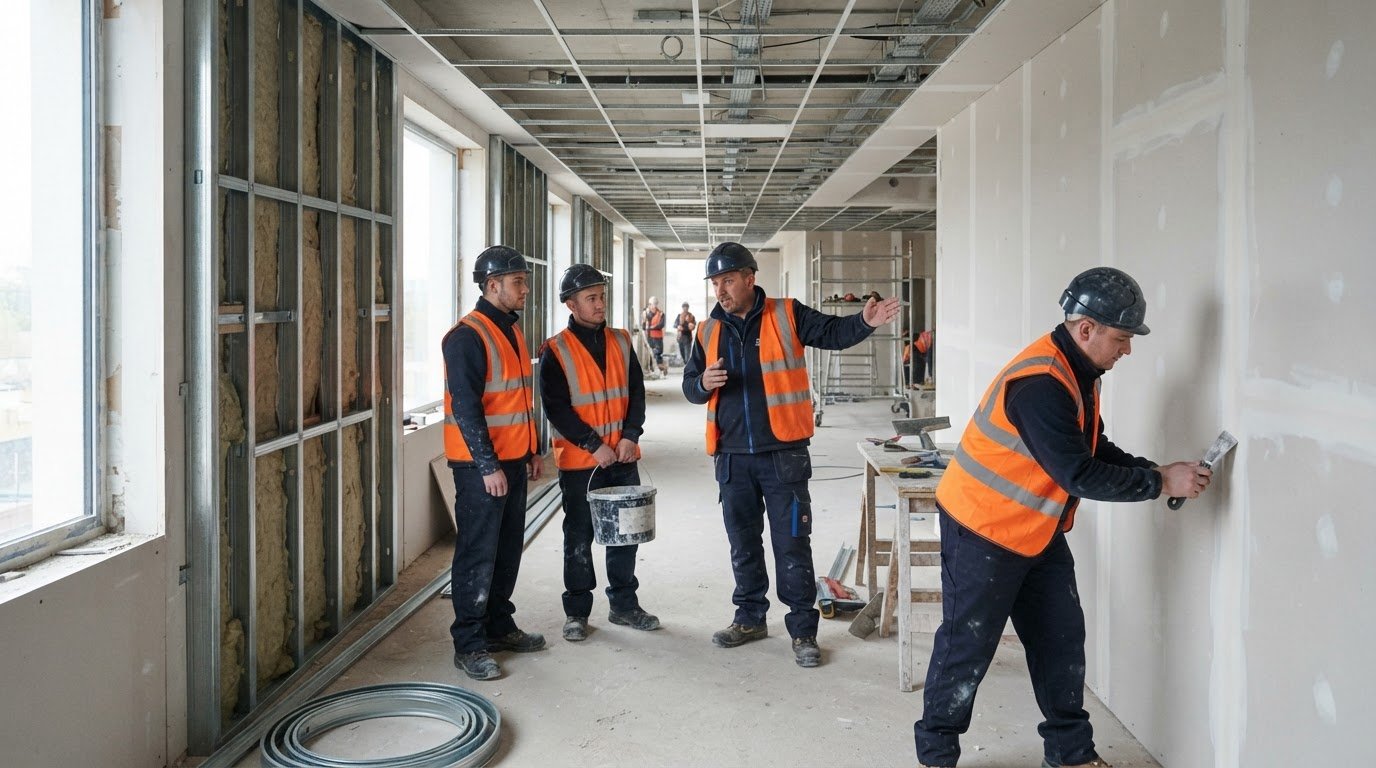
A delay isn’t managed by simply adding time to the programme. Managing construction project delays starts with identifying what has changed, assessing the effect on dependent and critical-path activities, and agreeing a response such as resequencing tasks or reallocating resources. Prompt decisions, clear communication and accurate site records help teams limit disruption and understand its effect on completion.
A delay can put pressure on deadlines, budgets and coordination across trades. Its effect depends on the cause and whether the affected work is on the critical path. A delay to an activity with available float may not change the completion date.
This guide covers common causes of construction delays, ways to address resource shortages and communication gaps, and what delay and critical path analysis can establish. It also explains how a disciplined team monitors changes, records decisions and keeps the programme aligned with site progress.
Key Takeaways
- Identify the cause of a delay early, then assess its effect on the programme before deciding how to respond.
- Coordinate labour, materials and updates across the team to address resource gaps and reduce avoidable disruption.
- Use critical path and float analysis to distinguish activities that affect completion from those with scheduling flexibility.
- Keep clear records of progress, changes and site conditions to support sound decisions and understand the delay’s impact.
How do professionals manage construction project delays?
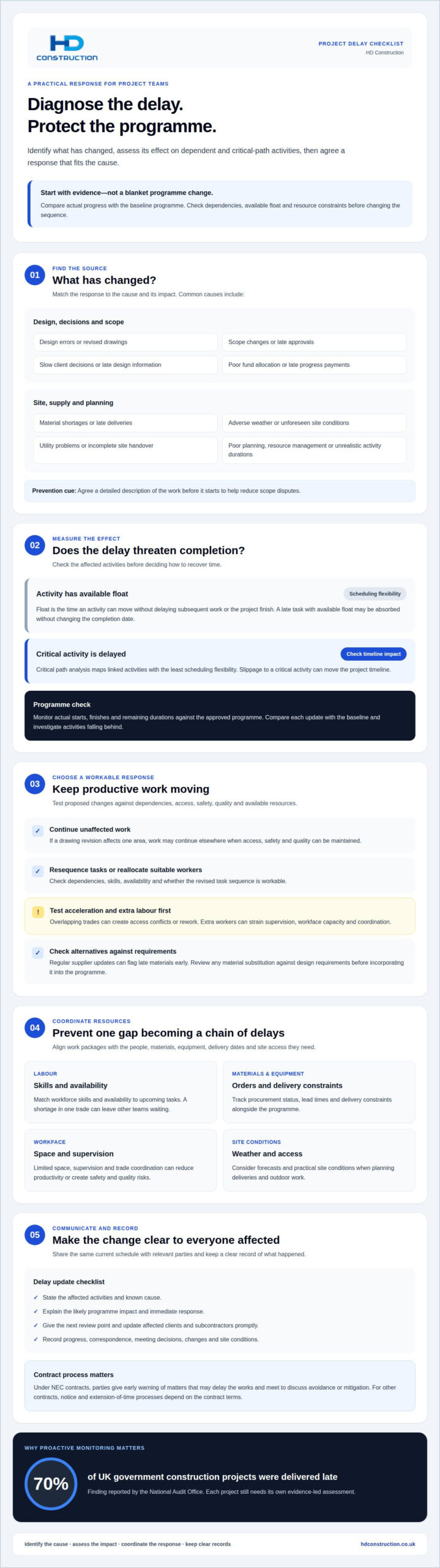
A project team should identify the source of a delay, then assess its effect on progress and completion. Common causes include design errors, revised drawings, scope changes, late approvals, material shortages, adverse weather and unforeseen site conditions. Utility problems, incomplete site handover and late progress payments can also disrupt planned work. Match the response to the cause and its impact rather than changing the whole programme by default.
Contractor-related causes can include poor planning, inadequate resource management and unrealistic activity durations. For example, a late material order may leave an installation team without its planned workface. Client-related causes can include slow decisions, late design information, scope changes, poor fund allocation and an unprepared site. Agreeing a detailed description of the work before it starts can reduce scope disputes. Prompt approvals and clear decisions help avoid preventable stoppages.
To manage a developing delay, the project manager compares actual progress with the baseline programme and identifies affected activities. The team then checks dependencies, available float and resource constraints before resequencing work. If a drawing revision affects one area, unaffected work may continue elsewhere, provided access, safety and quality are maintained. Assess proposed changes for necessity and their effect on the project’s bottom line.
Acceleration, resequencing or adding labour may recover time, but each has risks. Overlapping trades can create access conflicts or rework, while extra workers may strain supervision, workface capacity and coordination. Test these constraints before changing the sequence or resource levels.
Managing construction project delays also depends on timely communication and clear records. The manager updates affected teams on the cause, decision and revised sequence, then records progress, correspondence, meeting decisions and site conditions. Under NEC contracts, parties give early warning of matters that may delay the works and meet to discuss avoidance or mitigation. For other contracts, notice and extension-of-time processes depend on the contract terms. Clear records help establish what happened, when it happened and how it affected the programme.
2. Resource shortages and communication breakdowns
A programme can slip when planned activities lack labour, materials or equipment. Effective scheduling matches each work package to available resources, delivery dates and site access. For example, a ceiling installation cannot proceed as planned if materials arrive after its allocated work period. Managers should review procurement status alongside the programme and identify shortages before they stop dependent trades.
Workforce management means matching skills and availability to upcoming tasks. A shortage in one trade can leave other teams waiting, even when they are on site. Managers can identify where labour is underused, then reallocate suitable workers or adjust the task sequence. Extra labour is not automatically the answer: limited workface space, supervision and trade coordination can reduce productivity or create safety and quality risks.
Supply management starts with tracking orders, lead times and delivery constraints. Regular supplier updates can flag late materials early, giving the team time to consider alternatives or resequence activities. Weather can affect deliveries and outdoor work, so schedules should account for forecasts and practical site conditions. Review material substitutions against design requirements before incorporating them into the programme.
Communication gaps can compound shortages. Project managers should update clients and subcontractors as soon as a delay becomes apparent. State the affected activities, known cause, likely programme impact, immediate response and next review point. Record decisions and share the same current schedule with relevant parties to reduce conflicting instructions and missed handovers.
For instance, if a delayed delivery affects one work area, the manager can explain which teams are affected and whether other activities can proceed. Regular progress reviews then test whether the revised sequence remains workable. Coordinated construction delivery support can help align site activities, resources and communication as plans change.
3. Delay analysis and critical path analysis
Professional teams monitor progress against the approved programme, checking actual starts, finishes and remaining durations. A useful early-warning step is comparing each update with its baseline, then investigating activities falling behind. The National Audit Office found 70% of UK government construction projects were delivered late. That national finding underlines why proactive monitoring matters, but each project needs its own evidence-led assessment.
Critical path analysis identifies linked activities with the least scheduling flexibility. Managers map dependencies, calculate float and assess whether slippage could affect the completion date. Float is the time an activity can move without delaying subsequent work or the project finish. A late task with available float may be absorbed, while a delay to a critical activity can move the timeline.
Survey and factor analysis can help teams organise evidence about recurring delay causes. A survey gathers views from people involved in delivery; factor analysis groups related responses into broader themes. On a live project, managers can use this approach to distinguish isolated issues from patterns, such as repeated late approvals or material coordination problems. It supports investigation but does not replace programme records.
Delay analysis examines the programme alongside dated project documents. Site reports, correspondence, meeting minutes and change records help establish when an event occurred and which activities it affected. Analysts compare planned and actual progress, test dependencies and assess whether the event changed the critical path. This creates a traceable explanation instead of relying on a general claim that work finished late.
Cost or quantum analysis examines the financial effect linked to delay or disruption. It can assess supported loss and expense claims, cost overruns or damages by connecting records to affected work and time periods. Separate delay-related impacts from unrelated project costs, using contemporaneous evidence where available. Together, schedule and quantum analysis clarify the cause, timeline and financial effect, supporting informed decisions about recovery and contractual discussions.
4. Definition and effects of construction delays
A construction delay is additional time beyond the original contracted timeline. It matters when actual progress affects agreed milestones or completion, not simply because one activity finishes late. A task with available float, for example, may slip without changing the project finish date. A delay to a linked critical activity can extend the programme and affect later trades.
The effect can extend beyond the calendar. A longer project may require additional labour, site overheads and resources, putting pressure on cash flow. Disruption can also leave teams idle if they cannot access their work area or materials. When shortages interrupt planned deliveries, dependent activities may shift, creating further coordination demands and potential cost overruns.
Construction contracts commonly distinguish four delay categories: neutral causes, client-fault delays, contractor-fault delays and concurrent delays. These distinctions help establish responsibility and the contractual response. An event beyond a contractor’s control may support an extension of time, but does not automatically establish a right to additional costs. The event, its effect and the contract terms all matter.
Responsibility can affect both completion and financial outcomes. If contractor-caused delay affects the completion date, liquidated and ascertained damages may apply when the contract explicitly provides for them. Client changes or late design information can affect the programme differently. Concurrent delay, when events attributable to different parties overlap, requires careful analysis of timing and effect rather than assumption.
The practical takeaway is to assess each delay against the baseline, affected activities and contract provisions. A late finish alone does not show which event caused the overrun, whether it changed completion, or who bears responsibility. Dated progress records and change documentation help clarify those points. For construction delivery support shaped around your project requirements, discuss your construction project.
HD Construction
HD Construction supports projects where interior trade packages need clear scope and coordinated delivery. When delays affect planned work, its Drylining, Plastering, SFS (Steel Framing System) and Taping & Jointing services can be incorporated into the revised sequence. Early coordination helps align the required work with site access, preceding activities and the wider programme.
Bring HD Construction into the discussion when the project’s interior scope or sequencing needs practical review. Information about affected areas, current progress and upcoming activities helps show how the relevant trade work fits the programme. This supports focused planning with the project team, without assuming every delay can be recovered by adding labour.
Contact HD Construction to discuss your project’s construction requirements.
Set the next project decision in motion
A disciplined approach to managing construction project delays starts with decisions that keep the remaining work aligned with the programme. Define the affected scope, confirm priorities and coordinate the required trade packages with the wider sequence. Clear responsibilities and timely information give each party a practical basis for moving forward.
HD Construction provides Drylining, Plastering and SFS (Steel Framing System) services for construction projects. These packages can support affected interior or framing work, with coordination shaped around project requirements and site progress.
Share the relevant project context and discuss how the required work fits the programme. Discuss your project with HD Construction and take the next step with a clear, considered plan.
Frequently Asked Questions
What are the costs of construction delays?
Construction delays can increase costs through extended site overheads, longer labour requirements, equipment use and inefficient working. A delayed handover may also affect cash flow and payment timing. The financial effect depends on the delay’s duration, the resources tied to affected work, the contract terms and whether disruption creates additional costs elsewhere. Separate delay-related costs from ordinary project expenditure when assessing the impact.
What are the main causes of delay?
Common causes include planning errors, late design information, scope changes, resource shortages, supply-chain disruption, adverse weather and unforeseen site conditions. Several can combine: a revised drawing may delay an order, leaving a scheduled team without materials. Identifying the sequence matters because the first visible problem may not be the original cause. Reviewing decisions, deliveries and site records helps distinguish triggering events from their consequences.
What are the most common causes of construction project delays in the UK?
UK construction projects can be delayed by late approvals, design revisions, labour or material shortages, poor coordination and weather conditions. Site readiness and slow decisions can also disrupt planned work. The causes vary by project: a refurbishment may encounter unexpected existing conditions, while a new development may depend on timely design information and deliveries. Assess the actual site and programme rather than assuming one cause applies everywhere.
What steps should a UK construction project manager take when a project is delayed?
A UK project manager should first record the event and establish which activities and milestones it affects. Next, review the programme and contract procedures, then issue any required notices through the stated channels. Agree a proportionate mitigation plan with affected parties, identifying responsibilities and decision dates. Keep updated records of progress, instructions and resulting changes, so later assessments reflect the sequence of events accurately.
How can critical path analysis help manage construction project delays?
Critical path analysis shows whether a delay threatens the planned completion date or affects work with scheduling flexibility. If a delayed inspection sits before several dependent activities, for example, the analysis reveals which follow-on tasks may also move. Managers can focus on that chain, test alternative sequencing and monitor changes to the forecast. This clarifies programme impact but does not by itself establish contractual responsibility.