

A project can be fully designed and still lose time when package boundaries and trade interfaces are unclear. Appointing an apartment development contractor starts with defining responsibility for design coordination, procurement, sequencing and site delivery. A clear scope helps reduce the risk of duplicated work, gaps and avoidable rework.
Choosing between a specialist trade package and a broader design-and-build appointment can be difficult because each route allocates responsibility differently. The right fit depends on the design status, construction requirements and level of coordination the project needs. This guide explains how contractor involvement can develop from early planning and scope definition through procurement and construction. It also shows how design-and-build delivery can connect project coordination with construction, while specialist packages such as SFS, drylining, plastering, ceiling systems and firestopping support the sequence of interior works. Use the guidance to define responsibilities and choose a delivery approach that gives the project a coordinated route from design into construction.
Key Takeaways
- Set out the developer’s decisions and the contractor’s agreed delivery responsibilities to reduce gaps and overlap.
- Use current drawings, specifications and programme assumptions to turn the project brief into a clear, measurable scope.
- Assess an apartment development contractor’s appointment by scope ownership, design coordination and procurement interfaces, not just by the delivery model.
- Choose between a specialist trade package and design-and-build according to the project’s design status and coordination needs.
- Prepare for appointment by recording scope boundaries, design information, programme assumptions and who makes key decisions.
What an apartment development contractor contributes to project delivery
An apartment development contractor delivers construction work under an agreed appointment. The scope may cover a complete design-and-build project or specific work packages within a wider development. The appointment defines the work, interfaces and responsibilities, so the contractor’s role can differ from one scheme to another. Specialist packages such as SFS, drylining, plastering, ceilings and firestopping need clear boundaries and coordination with adjoining trades.
The developer retains the client role, sets the scheme’s objectives and makes decisions about its requirements. The contractor plans and delivers the construction work assigned under its appointment. Designers develop the drawings and specifications that communicate the design and support coordination and construction. These roles connect throughout the property development process, but the agreed contract and any design duties determine who is accountable for each task.
Developer, contractor and design team: who does what?
The developer establishes the project brief, approves key decisions and sets requirements such as intended use, scope and quality. Designers translate those objectives into coordinated technical information, resolving how building elements fit together. The contractor uses the agreed information to plan construction activities, coordinate its appointed packages and deliver the defined work.
For example, where an internal wall package meets a ceiling or firestopping package, the drawings and package boundaries should make the interface clear. The contract should identify who supplies relevant design information, who reviews it and who resolves changes. This gives each party a working basis for coordination instead of leaving the team to rely on assumptions made on site.
When to appoint an apartment development contractor
Early contractor involvement can bring construction planning into the design process before all details are fixed. Input on buildability, sequencing, access and package interfaces can help the team identify coordination issues while design decisions are still being developed. Early involvement does not, by itself, transfer design responsibility. That depends on the appointment and the design duties it defines.
Appointing after design development can give the contractor a more complete set of drawings and specifications against which to plan and define its scope. This may suit a project with mature design information. Earlier involvement may be useful when design coordination and construction planning need to progress together. Project size, design maturity and procurement route all affect the appropriate timing.
Align the appointment with the information available and the responsibilities the developer wants the contractor to hold. A specialist trade appointment focuses on a defined package, while a broader design-and-build route can connect design coordination with construction delivery. The design-and-build contractor process guide explains how that wider procurement route can be structured.
How apartment development work is planned, scoped and coordinated
Coordinated delivery starts before work reaches site. The project brief sets out the intended scope and requirements. Design information then develops into defined work packages, procurement decisions and a construction sequence. Each step should use consistent information so that the people pricing, planning and carrying out the work share the same understanding of what is included.
For an apartment development contractor scheme, the scope should be clear enough to measure and coordinate, not just describe in broad terms. Drawings, specifications and schedules define the work, while written assumptions establish what the package relies on. Record responsibilities for design information, approvals, access, setting out and interfaces in the appointment rather than leaving them open to interpretation.
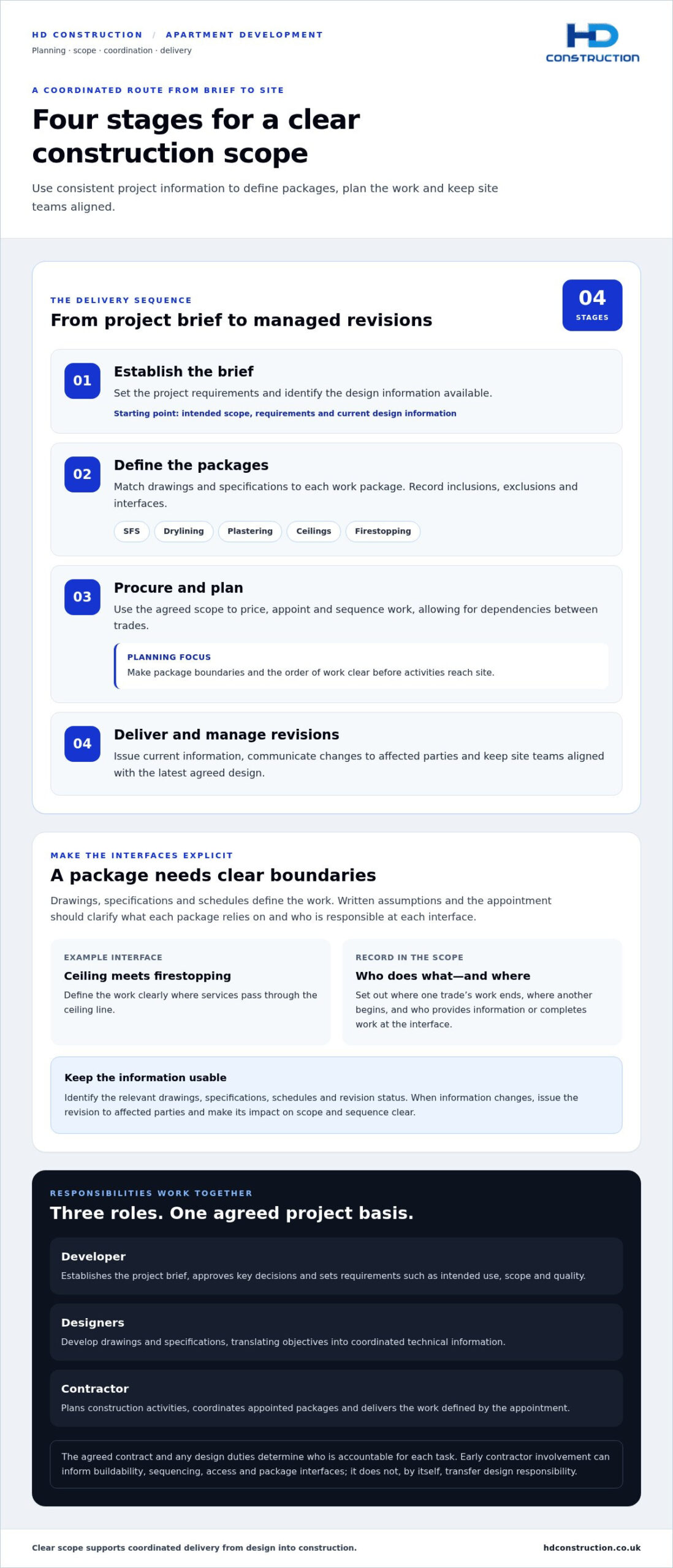
- Establish the brief: Set project requirements and identify the design information available.
- Define the packages: Match drawings and specifications to each work package, recording inclusions, exclusions and interfaces.
- Procure and plan: Use the agreed scope to price, appoint and sequence work, allowing for dependencies between trades.
- Deliver and manage revisions: Issue current information, communicate changes to affected parties and keep site teams aligned with the latest agreed design.
Statutory and technical requirements depend on the project, its design and the work being undertaken. Identify the obligations that apply to the specific scheme and reflect them in the project information and appointment. Broader policy context is distinct from project-level compliance. UK government housebuilding initiatives provides background on measures intended to support housebuilding.
Build a coordinated scope before work starts
A useful package brief identifies the relevant drawings, specifications, schedules and assumptions, including their revision status. It also records exclusions and boundaries: where one trade’s work ends, where another begins, and who provides information or completes work at each interface. For example, the ceiling and firestopping packages need clear definitions where services pass through the ceiling line. When information changes, issue the revision to affected parties and make its impact on scope and sequence clear.
Sequence structural framing and internal works
SFS can form part of the building’s framing sequence, with its position and interfaces coordinated against the project design. Follow-on internal work, including drylining, ceilings and firestopping, relies on relevant preceding work and coordinated details. Planning these relationships helps teams identify dependencies before they become site-level conflicts. The SFS construction guide explains how steel framing systems work within building projects.
Package coordination is practical, not just administrative. A clear sequence identifies what must be ready before the next trade starts, which information supports that work and how changes are communicated. HD Construction’s design-and-build and specialist construction work brings these scopes into a project delivery context, helping clients consider the level of coordination their scheme needs.
How to compare apartment development contractor delivery routes
The main difference between a specialist subcontract and a broader design-and-build appointment is how much scope and coordination sits with the appointed contractor. Neither route is automatically faster, cheaper or lower-risk. The right fit depends on the project’s design status, the developer’s desired level of control, the contract structure and how responsibilities are allocated across the team.
Specialist trade package or wider project appointment?
A defined package can suit a project with an established delivery structure and a clear requirement for work such as SFS, drylining or ceiling systems. The contractor delivers its agreed scope, while the developer or wider project team manages coordination with other packages. A design-and-build appointment can bring design coordination and construction delivery within a broader scope, subject to the duties set out in the contract. In either case, unclear boundaries between packages can leave work duplicated or unallocated.
| Consideration | Specialist trade package | Design-and-build appointment |
|---|---|---|
| Scope ownership | Centres on a defined trade or group of trades. | Covers a broader agreed project scope. |
| Design coordination | Interfaces with the wider design and project team remain important. | Design coordination can sit within the appointment, as defined by its design duties. |
| Procurement interfaces | The client or project team coordinates adjoining packages and their boundaries. | More coordination may be brought together under one appointment, subject to scope. |
| Client management | The client manages a more segmented set of package relationships. | The client manages a broader appointment and retains its client decisions and requirements. |
This comparison is a starting point, not a substitute for the contract. For example, if a ceiling package excludes firestopping around service penetrations, the appointment should identify who owns that work and what information is needed to complete it. A wider appointment also needs defined inclusions, exclusions and design responsibilities. A broader label alone does not settle them.
Compare capability against the actual project scope
Start with the work the scheme requires, then compare that list with the proposed appointment. Identify whether it covers SFS, drylining, plastering, ceilings or other relevant packages, and map each package to its design information, interfaces and dependencies. An interior fit-out delivery guide can help frame package readiness and delivery considerations for related work.
For an apartment development contractor London appointment, assess the route against the project’s current design information and the coordination the team needs. Look for a clear account of who manages revisions, resolves package interfaces and communicates decisions to the people affected. Then check that the scope and contract describe those responsibilities consistently. The practical question is not which model sounds broader, but which documented arrangement fits the work and gives each party a clear role.
How to prepare an apartment scheme for contractor appointment
A well-prepared appointment gives the contractor a consistent basis for understanding, pricing and planning the agreed work. It also helps the project team identify incomplete design information, package interfaces and responsibility for decisions. Before issuing a brief, bring the project documents together and make their status clear. Base an apartment development contractor London appointment on defined requirements rather than assumptions about what a package includes.
Use this checklist to organise the brief and tender information:
- Current design information: Gather drawings, specifications and schedules, identifying their revision status and any information still in development.
- Scope boundaries: Set out inclusions, exclusions, assumptions, expected deliverables and interfaces with adjacent work packages.
- Programme basis: Record milestones, sequencing dependencies, access constraints and coordination points that could affect the package.
- Decision responsibilities: Name the roles responsible for design decisions, approvals, information issue and communication of changes.
- Quality and records: Identify the agreed inspection points, quality checks and records required for the work and handover.
- Information control: State how current documents will be issued, revisions tracked and superseded information withdrawn from use.
Prepare the brief and tender information
Make the brief specific enough for the contractor to understand both the work and its boundaries. For example, identify the relevant areas and elements, the drawings that define them, and any work excluded or provided by another package. Record dependencies such as access to a work area or completion of preceding work. This gives procurement a clearer basis and helps expose missing information before it affects site planning.
Set out programme assumptions without presenting provisional dates as confirmed. Identify which activities depend on design information, approvals, access or preceding trades. If the design changes, use a controlled process to issue revised documents and communicate the effect on scope, sequence and decisions. These arrangements help the team work from a shared set of information.
Set up quality, safety and handover evidence
Agree what checks and records apply to the appointed scope, who completes them and when they should be available. For specialist work, including firestopping, coordinate details with adjoining packages and identify how installation information and relevant evidence will be captured for handover. Requirements depend on the project and appointment, so define them against the applicable project information rather than relying on generic assumptions. The passive fire protection guide explains how scope, installation and evidence relate.
Once the brief is assembled, review it as a connected set. Scope, design information, programme, interfaces and decision routes should align. For a coordinated route from project requirements into construction, discuss your apartment development scope with HD Construction.
How HD Construction supports apartment development delivery
HD Construction delivers apartment developments and design-and-build projects, alongside specialist construction packages. Project teams can appoint the company for a broader delivery scope or engage it for defined work within a wider scheme. The appropriate route depends on the project brief, the design information available and the responsibilities the client intends to allocate through the appointment.
For developers assessing an apartment development contractor, connect the chosen delivery approach to the actual scope. A design-and-build appointment can bring design coordination and construction delivery together within an agreed contract. A trade-package appointment focuses on defined work, with its interfaces managed alongside other project packages. The contract should make clear what the appointment includes, where design duties sit and how changes or decisions are communicated.
Align the delivery approach with the project brief
HD Construction’s work can be matched to the project requirements and the level of delivery responsibility sought. The brief establishes the intended scope; the appointment then records the agreed work, relevant design responsibilities and boundaries with other packages. This matters whether the engagement covers design-and-build delivery or a specialist trade scope.
For a defined package, the appointment can identify the work areas, information to be used and interfaces with adjoining activities. For a broader scope, it can set out how design coordination relates to construction delivery and which decisions remain with the client. Clear documentation supports a shared understanding of roles without assuming that every project uses the same arrangement.
Bring specialist construction packages into the wider scheme
HD Construction’s specialist scope includes SFS, drylining, plastering, ceiling systems and firestopping. These packages relate to different stages and interfaces within apartment construction. Framing information can inform adjoining internal work; drylining and plastering form part of wall finishes; ceiling systems meet other building elements; and firestopping needs coordination at relevant penetrations and junctions. The exact scope and sequence depend on the project design and appointed responsibilities.
Defining interfaces helps the project team understand how these trades connect, what information each package needs and where one scope ends and another begins. For instance, the appointment can specify how firestopping relates to openings through walls or floors, and how relevant details are communicated to the teams involved. This keeps coordination tied to the agreed design and responsibilities instead of relying on assumptions during construction.
HD Construction’s apartment development and design-and-build work can support clients seeking either a broader project appointment or specialist construction scope. To discuss the brief, required packages and delivery route for your scheme, discuss an apartment development project with HD Construction.
Set the next stage of your apartment scheme with clarity
Turn your project objectives into an appointment that reflects the design information, required work and level of coordination the scheme needs. A clear brief gives the project team a practical basis for discussing scope, interfaces and responsibilities before delivery begins. For an apartment development contractor London project, early alignment helps keep procurement decisions connected to construction requirements.
HD Construction delivers design-and-build projects for apartment developments and refurbishments, alongside specialist packages including SFS, drylining, plastering, ceiling systems and firestopping. These options can be considered against the scope and procurement approach set out for your project, with responsibilities defined through the appointment.
Bring your project brief and required scope into the conversation to establish a suitable route forward. Discuss your apartment development brief with HD Construction and take the next step with a clear basis for delivery.
Frequently Asked Questions
What is the difference between an apartment development contractor and a property developer?
A property developer brings forward the scheme and manages its commercial objectives, while an apartment development contractor delivers construction work under an agreed appointment. For example, a developer may decide the apartment mix and project requirements, while the contractor plans and carries out the construction scope assigned to it. The contract defines the precise division of responsibilities, including any design duties, so job titles alone do not determine who is accountable for each task.
When should a contractor be appointed for an apartment development?
Appoint a contractor when its input can support the project’s next decisions, whether during early planning or delivery against developed design information. An early appointment, for instance, may help test whether proposed package boundaries and construction sequence align. A later appointment may be based on a more developed design. The decision should reflect the information available, procurement route and responsibilities the client intends to place in the contract.
What information should a contractor brief include?
A contractor brief should give bidders a common, clearly identified basis for understanding the work. Alongside the scope and design documents, include the process for submitting tender queries, the required format for proposals and the assumptions bidders should state. A document register can identify current revisions and outstanding information. This makes it easier to compare submissions on the same basis and resolve differences before finalising an appointment.
Can one contractor deliver both design-and-build work and specialist trade packages?
Yes. HD Construction undertakes design-and-build work as well as specialist packages such as SFS, drylining, plastering, ceiling systems and firestopping. The appointment should make clear whether these activities form part of a broader design-and-build scope or are defined as separate packages. It should also explain how design duties, package boundaries and coordination with other project work are allocated, so the arrangement matches the scheme’s procurement structure.
Who is responsible for planning permission on an apartment development?
The developer or project client commonly leads the planning application as the party bringing forward the scheme, but responsibility depends on the project arrangements and who is named as applicant. The contractor’s construction role does not automatically make it responsible for securing planning permission. Contractor input may inform practical construction considerations, while planning decisions sit with the relevant planning authority. Confirm the applicant, decision-making route and any required pre-construction approvals within the project team.
How should firestopping be coordinated in an apartment building?
Coordinate firestopping details with the locations where services pass through walls and floors, and with the work that will conceal those areas. For example, agree how penetrations are identified, which package carries out the work and what project records are required before finishes close access. This helps connect installation, inspection and handover information. The exact details and evidence should follow the project design and applicable requirements, not a generic assumption.